
PROFINET vs Ethernet: Definitions and a Comparison

What is the difference between PROFINET and Ethernet? Can you give us a PROFINET vs Ethernet comparison? We get these questions quite often. And they are kind of difficult to answer because PROFINET and Ethernet are complementing technologies, not competing technologies. This short post will illustrate the comparison between PROFINET and Ethernet. Let’s start by…
Read MorePROFINET Switch Options and Features
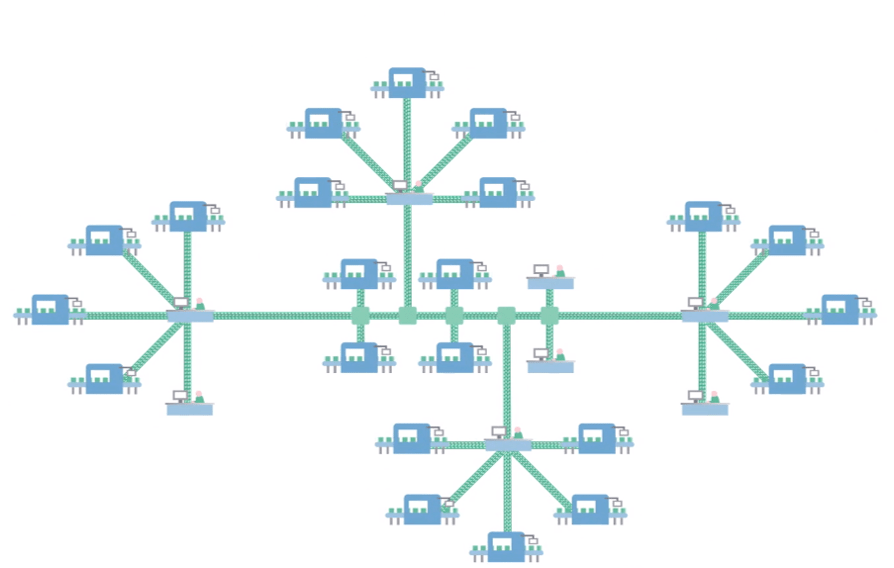
PROFINET offers a variety of possible topologies: tree, line, ring, star, etc. Nearly all PROFINET devices have at least two ports on them, and behind these two ports, there is an integrated switch that allows the creation of line topologies. Star topologies are efficient solutions in some applications, and for that, you have dedicated Ethernet…
Read MorePROFIdrive for Interoperable Drive Devices

PROFIBUS and PROFINET International (PI) has specified over a dozen PROFINET Application Profiles. Application Profiles are an additional layer above the PROFINET protocol. A PROFINET product that supports one or multiple Application Profiles offers further functionality besides the standard PROFINET capabilities. The most commonly implemented PROFINET Application Profiles are PROFIsafe for functional safety, PROFIenergy for…
Read MorePROFINET IRT- Isochronous Real Time
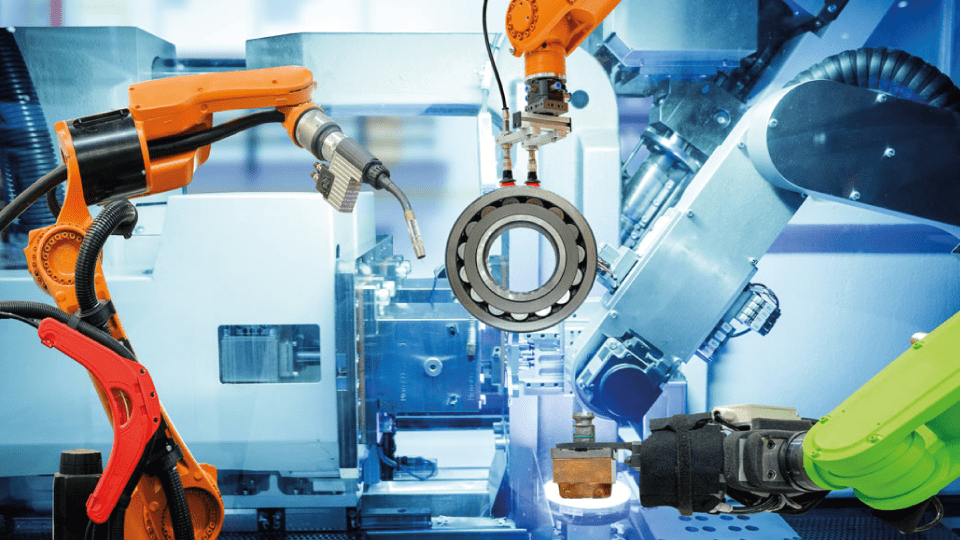
PROFINET employs its first two communication channels: TCP/IP and UDP/IP, and Real-Time (RT) for most data exchange. It employs TCP/IP (or UDP/IP) communications for non-time-critical tasks, such as configuration, diagnostics, and parameterization. And PROFINET RT handles time-critical data exchange. Yet, some industrial applications require faster performance. For those applications, PROFINET employs the Isochronous Real-Time (IRT)…
Read MorePROFINET RT: Real-Time Performance
Every industrial network has a unique set of requirements as it must fulfill a variety of different tasks. Some tasks require high-speed synchronized communication. Others are not as time-critical. PROFINET is the world’s most advanced Industrial Ethernet solution. It is a communication protocol to exchange data between controllers and devices. PROFINET can operate in challenging…
Read MorePROFINET Optional Features
All PROFINET products are developed according to international standards and certified by PROFIBUS and PROFINET International (PI). Aside from the mandatory characteristics in each PROFINET device, PI defines a list of optional features. The next section covers a brief definition of several PROFINET optional features. The list below is not comprehensive, but it includes the…
Read MoreThe Difference between PROFIBUS and PROFINET

What is the difference between PROFIBUS and PROFINET? We get this question fairly often. This article covers a comparison between PROFIBUS and PROFINET. In short: PROFIBUS is a classic serial Fieldbus, and PROFINET is an industrial Ethernet protocol. PROFIBUS and PROFINET are both IEC standards created by the same organization: PROFIBUS and PROFINET International. Because…
Read MorePROFINET Network Commissioning Guide Q&A
Two weeks ago, in collaboration with the PROFI Interface Center (PIC), we hosted a PROFINET Network Commissioning Webinar. In the webinar, we covered a guide and useful tips for the commissioning stages. If you would like to watch the full webinar, the recording is available online. We also had a live Q&A section during the…
Read MorePROFINET Profiles, Additional Layers of Functionality
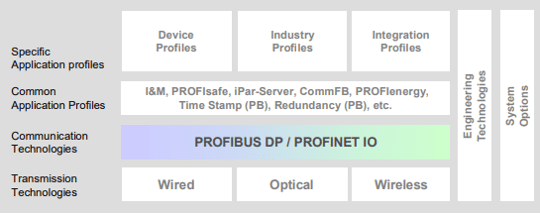
PROFIBUS and PROFINET International (PI) working groups develop Application profiles to ensure the openness, interoperability, and interchangeability of devices. PROFINET Application Profiles are vendor-independent specifications. They are implemented into PROFINET devices to enable the uniform behavior of devices from different manufacturers. These Application Profiles relate to device families or unique industry sector solutions. Application Profiles…
Read MorePROFINET Redundancy: Device, Controller, Network, and Media
Redundancy mechanisms turn a reliable system into a highly available system, adding extra components or functionality to maintain reliable operation through a number of failures. PROFINET allows you to build a reliable network according to your specific requirements. Specifically, PROFINET offers four redundancy options: Device Redundancy, Controller Redundancy, Network Redundancy, and Media Redundancy. Device Redundancy…
Read More