
Regulatory update would help facilitate UWB for industrial safety, Physical AI, robotics, automation, and real-time asset tracking
SCOTTSDALE, AZ – PI North America today welcomed the Federal Communications Commission’s (FCC) release of a Notice of Proposed Rulemaking (NPRM) addressing Ultra-Wideband (UWB) spectrum rules. PI North America is the regional arm of PI (PROFIBUS & PROFINET International), steward of the PROFINET, PROFIBUS, and IO-Link industrial communication standards, and the open location-tracking standard omlox.
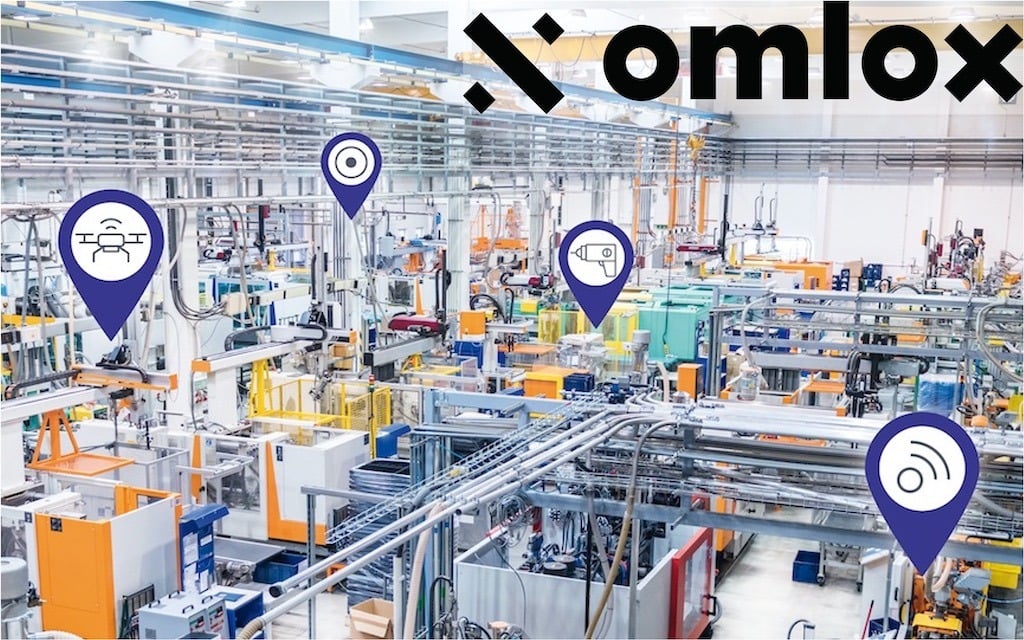
UWB has become a key technology on factory floors and in warehouses, where it tracks equipment, vehicles, robots, and workers with a high degree of accuracy – even indoors, where GPS is unreliable. Yet the FCC’s UWB rules have remained largely unchanged for more than two decades and have not kept pace with how widely the technology is now used in industrial settings.
“Factories and warehouses are demanding environments, and the original UWB rules were never designed with today’s industrial uses in mind,” said Eberhard Wahl, SICK, omlox Use-Case Working Group. “Updated rules mean more reliable performance for the plants and warehouses that rely on UWB to operate safely and efficiently.”
Mobile robots, cobots, and humanoid robots are moving beyond separated automation cells into dynamic environments shared with people, automated guided vehicles, and other machines. For these systems to operate efficiently and safely, they need a reliable understanding of where other assets, and infrastructure are in real time.
“Interoperability only works if the rules behind it are stable and well understood,” remarked Matthias Joest, Flowcate, omlox President. “UWB, together with other technologies, can become part of a shared spatial infrastructure for the next generation of logistics and industrial automation. Physical AI, autonomous mobile systems, and humanoid robots need to understand and safely interact with the physical world around them.”
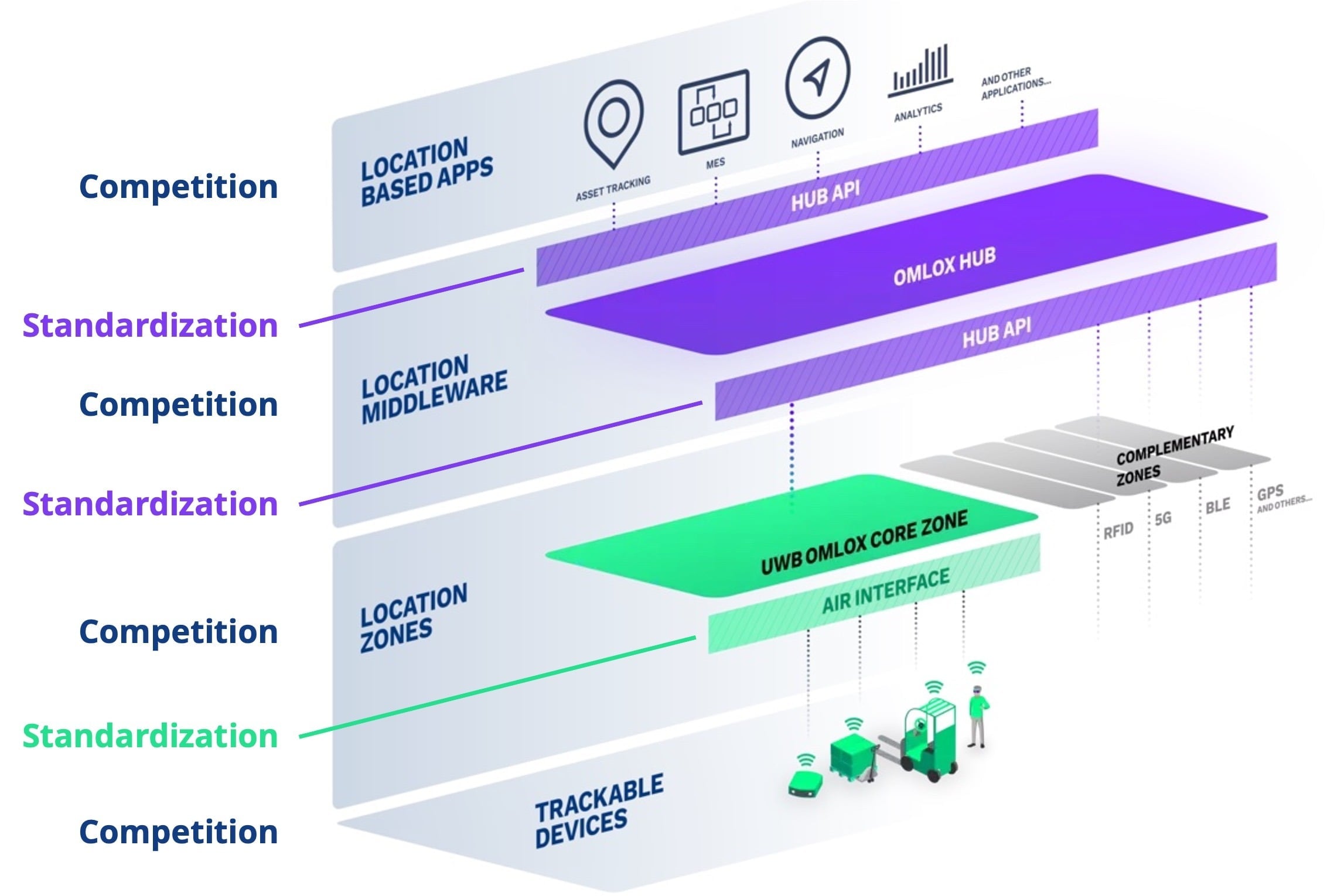
PI’s open location-tracking standard, omlox, provides a vendor-neutral framework for combining different locating and identification technologies. Depending on the application, this can include UWB for highly accurate real-time positioning, Bluetooth Low Energy (BLE) and Wi-Fi for infrastructure-based locating, GNSS for outdoor positioning, RFID for identification and location events, and camera- or SLAM-based systems for robots and vehicles.
“Modernizing the UWB framework is about more than the well-known UWB use-cases in the consumer world,” added Michael Bowne, Executive Director, PI North America. “These applications are just the tip of the iceberg –in that they are highly visible in our daily lives. But there remain the less-conspicuous applications: the hundreds of use-cases for UWB in industrial settings.”
Accurate UWB-based positioning supports use-cases such as dynamic geofencing, proximity warning, collision avoidance, safe-zone monitoring, and contact tracing. Infrastructure-based positioning can complement onboard sensors and provide an additional source of spatial information about the surrounding operating environment.
The proposal opens the door to new opportunities for industrial UWB deployment and could reduce the need for individual companies to seek case-by-case regulatory waivers to deploy proven applications. PI North America thanked the FCC’s technical staff for their work on the proposal and said it looks forward to participating in the rulemaking proceeding, drawing on input from its global membership of automation companies and end-users.
About PROFIBUS & PROFINET International (PI) and omlox
PROFIBUS & PROFINET International (PI) is a global organization supporting open industrial communication standards, including PROFINET, the leading industrial Ethernet standard, and omlox, a vendor-neutral location-tracking standard for real-time positioning and spatial interoperability. PI North America is a non-profit member-supported organization responsible for the North American market and is one of 24 regional associations that make up the global PI community. PI member companies span the automation, manufacturing, robotics, and industrial technology sectors worldwide.